By Joshua Brantley, Sr NERC Reliability Specialist
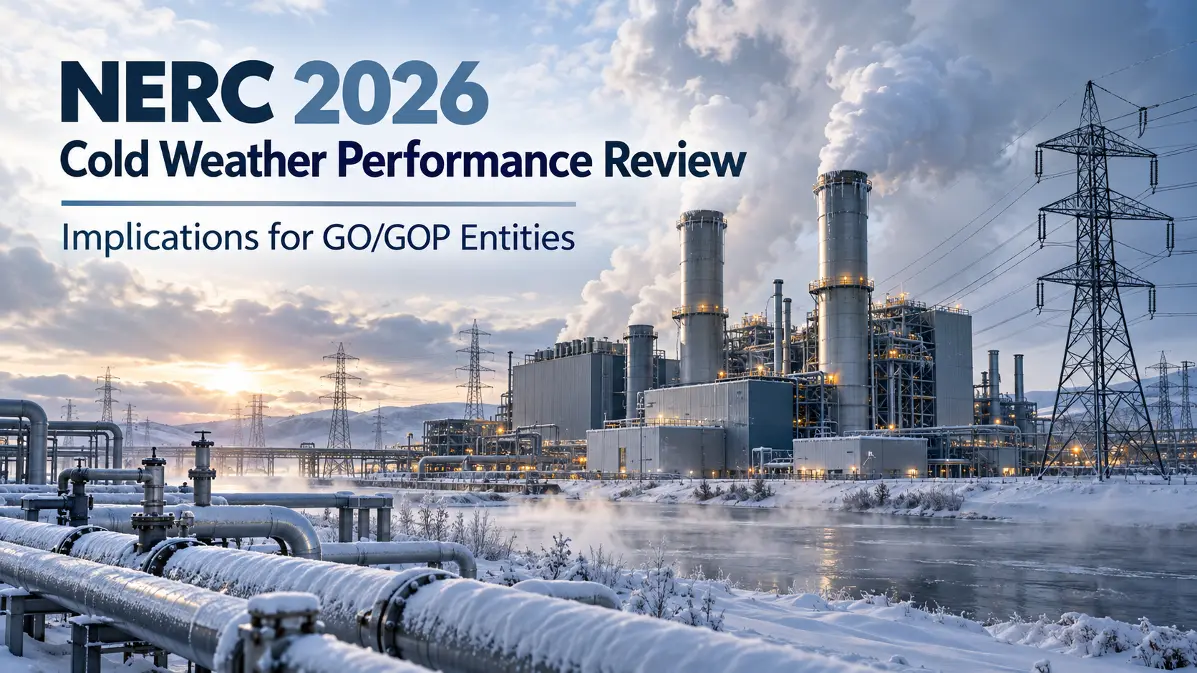
The joint 2026 cold weather performance review from FERC, NERC, and the Regional Entities delivers an encouraging message for the electric industry: preparation is improving, and those improvements are producing measurable results. During the 2026 Arctic cold period, including Winter Storms Fern and Gianna, prolonged extreme temperatures stressed portions of the Eastern and Texas Interconnections and challenged both the Bulk-Power System and the natural gas system. Even under those conditions, the review found no significant disruption to either system. Generator outages were comparable in magnitude to those experienced during the January 2025 Arctic events, yet overall performance improved relative to several earlier winter events. The review credits lessons learned from previous storms, advanced generator commitments, stronger winter preparedness, improved situational awareness, implementation of NERC cold weather Reliability Standards, and additional resource availability supported by federal emergency orders.
For Generator Owners and Generator Operators, the central lesson is that cold weather preparedness is becoming part of routine reliability performance rather than a seasonal documentation exercise. EOP-012-3 reinforces that shift by requiring Generator Owners to establish and maintain cold weather preparedness plans addressing Extreme Cold Weather Temperatures, Generator Cold Weather Critical Components, freeze protection measures, and applicable inspection and maintenance activities. The standard also includes annual unit-specific training expectations for applicable operations and maintenance personnel and establishes Corrective Action Plan obligations following qualifying Generator Cold Weather Reliability Events. The 2026 review does not suggest that these requirements have eliminated winter risk. Instead, it shows that disciplined preparation can materially improve system performance when severe conditions arrive. For GO/GOP organizations, the value of these activities becomes most visible during an actual event, when equipment, procedures, training, fuel arrangements, and communications must perform as intended under sustained stress.
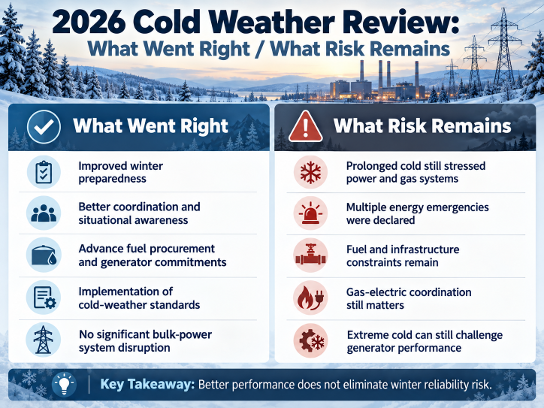
At the same time, the review makes clear that the system operated under considerable strain. NERC emphasized that both the electric and natural gas systems were stretched over multiple days, electric operators relied on their full range of reliability tools, and multiple energy emergencies were called. The successful outcome therefore should not be interpreted as evidence that winter reliability risk has been solved. Continuing concerns include the interdependence of natural gas and electric generation, limitations in natural gas infrastructure, communication and coordination between the gas and electric industries, and improved load forecasting during extreme cold. These findings are particularly important for facilities that depend on weather-sensitive fuel arrangements. A generating unit may be physically winter-ready while still facing significant reliability exposure from fuel availability, transportation constraints, inaccurate forecasts, or regional operating conditions beyond the facility fence line.
The practical takeaway for GO/GOP compliance programs is straightforward: winter readiness should be treated as an ongoing reliability process, not merely an annual compliance checkpoint. The 2026 performance review does not create new Reliability Standard requirements, but it provides useful insight into the vulnerabilities NERC and FERC continue to monitor. Strong programs should connect EOP-012 compliance activities with operating experience, maintenance findings, operator feedback, weatherization inspections, fuel planning, lessons learned, and corrective action tracking. Entities should also ask whether measures implemented after previous winters remain effective, whether temporary solutions have quietly become long-term vulnerabilities, and whether available evidence clearly demonstrates completion of required activities. The 2026 review is encouraging because it shows that industry actions are making a difference. Its caution is equally important: prolonged extreme cold can still push the interconnected electric and natural gas systems close to their limits, making sustained winter preparedness essential to both compliance and Bulk-Power System reliability.
| KEY TAKEAWAY Better performance does not eliminate winter reliability risk. Sustained preparation remains the objective. |
Primary sources
• FERC/NERC: System Performance Review of the Winter 2026 Arctic Cold Period