

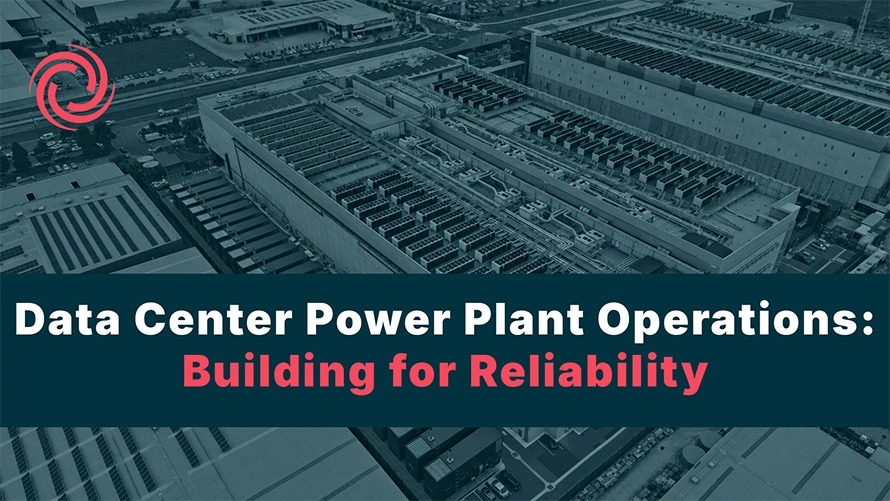
As AI and data center development drive electricity demand, grid interconnection delays are pushing more developers toward dedicated and behind-the-meter power generation.
But building enough capacity is only the first step. These facilities must deliver always-on power even during maintenance or unexpected equipment failures, making operations and maintenance planning essential from initial design through commercial operation.
Why Data Center Power Reliability Requires a Different Approach
Traditional power plants and dedicated data center generation facilities share similar equipment and operating principles, but data centers require consistent power delivery even during maintenance or unexpected equipment failures.
This introduces an important distinction between equipment availability and power availability.
Equipment availability refers to whether individual components are ready to operate, while power availability measures whether the overall system can meet the required electrical load.
For example, if one generating unit is undergoing maintenance and another unexpectedly trips, can the remaining units support the data center? The answer depends on available capacity, electrical configuration, and redundancy, all of which must be considered during plant design.
Design Power Plants Around Maintenance and Equipment Failures
One of the most effective ways to improve operational reliability is to involve experienced O&M personnel during the design process.
Engineers typically focus on meeting performance requirements, equipment specifications, and project costs. Operators can add another perspective by evaluating how the facility will function during maintenance, equipment failures, and abnormal conditions.
Plan for Equipment Unavailability
Generation redundancy is essential for data center power reliability. An N+1 configuration provides additional capacity, but extra generating units alone cannot guarantee continuous power delivery.
Shared equipment such as transformers, switchgear, and cooling systems can create single points of failure that affect multiple generating units. Design reviews must account for these risks and ensure the facility can maintain sufficient capacity during planned maintenance or unexpected equipment outages.
Make Equipment Accessible for Maintenance
Equipment arrangement and electrical system design directly influence how maintenance can be performed.
Operators need safe access to equipment, appropriate isolation points, and the ability to repair or replace components without unnecessarily affecting other systems.
For example, if maintenance on one transformer requires shutting down several generating units, the facility may lose more available capacity than the equipment failure itself would suggest.
Identifying these limitations during design allows developers to evaluate alternative arrangements before construction is complete.
Build a Maintenance Strategy Around Power Availability
Once the facility enters commercial operation, maintenance planning must account for both equipment condition and the power required by the data center.
The objective is to maintain equipment reliability while minimizing the risk of interrupting electrical service.
Coordinate Maintenance with Available Generation Capacity
Before scheduling maintenance, operators evaluate how equipment outages affect redundancy and whether remaining generation can meet the data center’s required load, especially when multiple systems are offline.
Planned outages, electrical switching, and changes in available capacity should also be coordinated with the data center’s operations team to ensure both sides understand the risks and operating requirements.
Use Equipment Data to Guide Maintenance Decisions
Preventive maintenance remains essential, and equipment condition monitoring helps operators identify problems before they lead to failures. Vibration, temperature, oil condition, operating trends, and equipment alarms can provide early warning signs.
For example, if vibration monitoring detects abnormal behavior in a generating unit, operators will determine whether it can safely continue operating, when maintenance is needed, and whether sufficient capacity remains if the unit is taken offline.
Established operating limits, maintenance history, and technical support help operators make informed decisions while minimizing unnecessary interruptions.
Prioritize Critical Spare Parts
Spare-parts planning should focus on the components whose failure could have the greatest impact on power availability.
Major equipment such as turbines, generators, and generator step-up transformers can have long replacement lead times. Even smaller components may create significant operational problems if they are difficult to obtain.
Rather than simply increasing inventory, operators should evaluate each critical component based on its failure consequences, replacement time, repair options, and available alternatives. For equipment that cannot reasonably be stocked onsite, facilities should establish replacement and technical support arrangements before a failure occurs.
Prepare Operators for Abnormal Conditions and Power Recovery
Reliable power generation depends on more than equipment condition. Operators should also be prepared to respond when the facility experiences unexpected operating conditions.
Automation can manage many routine functions, but equipment trips, electrical faults, and system disturbances still require trained personnel to evaluate conditions and coordinate the appropriate response.
Establish Clear Emergency Operating Procedures
Operating procedures address situations such as generating unit trips, sudden load changes, loss of grid connection, and electrical system faults.
For each scenario, they need to understand which systems are affected, what equipment remains available, and what actions are required to stabilize operations.
Recovery procedures are equally important. Returning equipment to service must follow established safety and operating requirements, particularly when multiple systems have been affected by an event.
Coordinate Power Plant and Data Center Operations
When separate organizations operate the generation facility and the data center, communication becomes an important part of reliability planning.
Both teams should have clearly defined responsibilities for maintenance coordination, electrical switching, operating notifications, and emergency response.
For example, if a generating unit unexpectedly trips, the power plant team must assess available generation and equipment conditions. At the same time, the data center team may need to evaluate its electrical systems and operating requirements.
Clear communication protocols help both organizations make coordinated decisions and avoid unnecessary delays.
Test Emergency Scenarios Before They Happen
Procedures should be tested before an actual emergency. For example, if one generating unit trips while another is offline for scheduled maintenance, operators must know which equipment should respond, whether remaining generation can support the required load, and how to restore stable operations.
Tabletop exercises, operator training, and commissioning tests help identify gaps in staffing, procedures, equipment response, and communication. Addressing these issues in advance improves operational readiness.
Start O&M Planning Before Commercial Operation
Many operational challenges can be identified and addressed before a power plant begins generating electricity.
Data Center Power Plant O&M Readiness Checklist
Before commercial operation, developers and plant operators should be able to answer several important questions:
| Operational Area | Key Question |
| Generation Capacity | Can the facility maintain the required load when a generating unit is unavailable? |
| Electrical Systems | Can critical equipment be isolated and maintained without unnecessarily interrupting power delivery? |
| Maintenance Planning | Are planned outages coordinated with available generation capacity and data center requirements? |
| Critical Spare Parts | Have components with significant failure consequences or long replacement times been identified? |
| Staffing and Training | Are qualified personnel prepared to respond to abnormal operating conditions? |
| Communication | Are responsibilities clearly defined between the power plant and data center operations teams? |
| Commissioning | Have relevant equipment failure and recovery scenarios been evaluated and tested? |
Reliable Data Center Power Starts Before the First Megawatt
Reliable data center power generation requires more than sufficient capacity. Decisions made during design, commissioning, and operations determine how well a facility can handle equipment failures, maintenance, and changing power demands.
With decades of power plant O&M experience, NAES helps developers plan and operate dedicated generation facilities built to deliver reliable power throughout their operating life.


