By: Presley Gerspacher, NAES 2026 Communications Intern
For many young people, choosing a career is a major decision. College, trade school, the military, or entering the workforce are all valuable options. But what happens when students do not know what they want to do, or what opportunities are available to them?
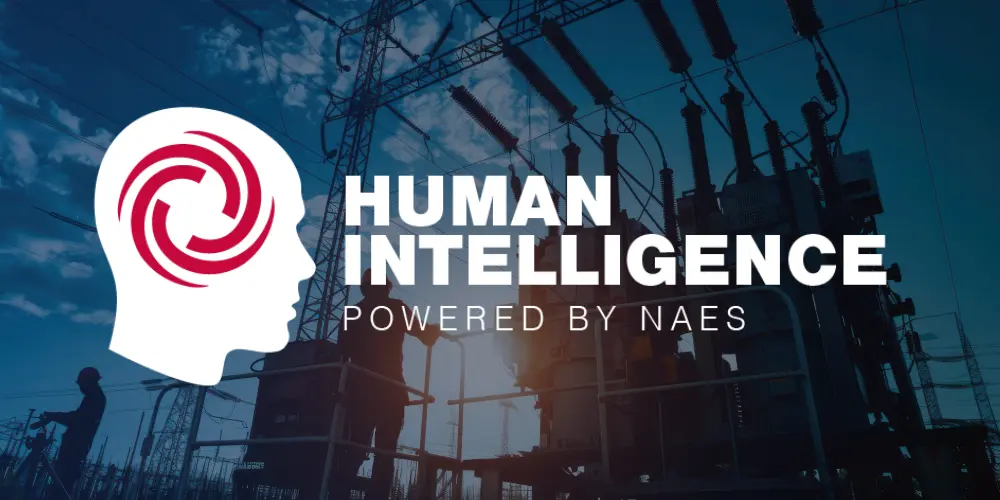
That question is at the heart of the NAES Human Intelligence Program, a career development initiative designed to connect students, recent graduates and transitioning military members with opportunities in the power industry. As the workforce continues to age, NAES is working to introduce the next generation to careers they may not know about.
A Personal Start
The inspiration behind the program was both personal and professional for NAES Energy Services Human Resources Director Samah Sous. It all started when her son was entering his senior year of high school. He was not interested in college and wanted to explore other career options. When Samah asked him about working at a power plant, his response stood out: “No one ever mentioned power plants to me. Other than you working in this industry, I’ve never heard about it.”
That conversation led Samah to reach out to his high school, where she realized career fairs often focused heavily on colleges while careers in skilled trades and other industries were not always represented. “I thought, how can we change that?” Samah said.
A Working Solution to a Growing Gap
The need for the program is also connected to the industry’s aging workforce. The Center for Energy Workforce Development (CEWD) estimates that more than 400,000 energy sector employees are expected to retire in the next decade, with utilities alone projected to lose about 50% of their current workforce to retirement. Balancing retirements with a growing demand for new talent in traditional and emerging energy fields is where the Human Intelligence Program comes in.
“Our workforce is aging and starting to get into retirement years,” NAES Recruitment Manager Patrick Gerspacher said. “We knew that we needed to get out to career fairs, college, university, trade schools, and even reach out to high schools about attracting a younger workforce.”
That goal of connecting the younger workforce to opportunities in the energy sector helped inspire the name of the program. “Human Intelligence,” works twofold: it is a play on artificial intelligence, while also emphasizing the importance of personal connection. “In recruiting, especially human resources, but recruiting especially, you need a human touch to it,” Patrick explained.
Creating Real-World Experiences
The Human Intelligence Program gives participants more information about potential careers in the energy sector. They can gain exposure to the power industry through personalized guidance from experienced NAES professionals, job shadowing, and facility tours. Participants can learn about different positions, build their professional network, and develop leadership and technical skills. “I think it’s just to get a hands-on look at what it takes to work in a power plant, get some experience, and see if it’s something that they’re interested in,” Patrick said.
The program is designed for individuals interested in areas like power generation, engineering, electrical, and mechanical fields, while also being an avenue for on-the-job learning, as opposed to a four-year degree. According to the National Skills Coalition, more than half of the jobs require skills training beyond high school, but not a four-year degree. Only 40% of America’s workers have access to the skills training necessary to fill these careers, making the Human Intelligence Program an attractive avenue for applicants with non-traditional backgrounds.
The program also aims to reach transitioning military members whose experience can translate into the industry. CEWD shows veterans represent about 11% of the energy workforce. Currently, NAES employs more than 200 veterans across all of its business units.
Part of Something Bigger
A major part of the Human Intelligence Program is the mentor-mentee relationship. Samah compares it to an internship, where mentees can observe daily activities, learn about different positions, and experience what it means to be part of a team. “I feel the mentor should provide all the information that they can share and their experience,” she said. “And the mentee being open to that and asking questions and being inquisitive, that’s what I’m hoping for.”
For mentors, the experience can be just as meaningful.
“It’s such a fulfilling feeling to guide someone and share your experience and shape someone’s future professionally,” Samah said. Patrick also sees mentors as an important part of building the future workforce. “It’s a chance to show them what a great career they can have working in a power plant and possibly find that person that could be the next incoming employee,” he said.
Looking Toward the Future
The Human Intelligence Program is still in its early stages, but its leaders have a larger vision for its future. “It’s still in the infancy stage,” Samah said.
The program has already begun building that presence through career fairs and other outreach efforts. “We’ve had great participation so far,” Patrick said. He hopes to see even more involvement from NAES in high schools, colleges and universities in their communities, giving students greater exposure to careers in power generation.
Ultimately, the Human Intelligence Program is about creating connections between experienced professionals and the next generation. A student cannot pursue a career they have never heard about. Through mentorship and real-world exposure, NAES hopes to change that. The program may still be growing, but its purpose is clear: connect with people, create opportunities and help build the next generation of the workforce.