By Bill Henson, NERC Reliability Specialist
Background
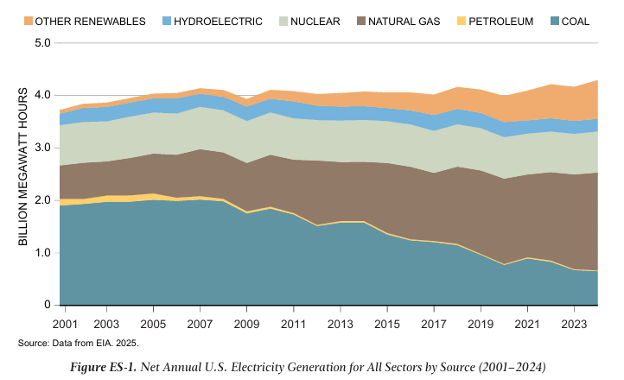
As the electric industry undergoes significant changes, new challenges and opportunities arise for reliability and security. In 2023, utility-scale power plants produced 4,183 terawatt hours (TWh) of electricity. Natural-gas fired generation averaged 1,806 TWh (43.2% of the generation mix), making it the largest single source of energy for U.S. electricity generation. According to the latest data, natural-gas-fired generation in 2025 surpassed the 2023 totals. These trends have spanned the past two decades, over which the gas fueled share for electricity generation has doubled. This has resulted in the electric power sector becoming the largest consumer of natural gas, leading to increased interdependence between the two industries.
This growing interdependence has created new challenges, such as those experienced during Winter Storm Elliott in December 2022 (extreme temperatures in the Northeast precipitated a sharp spike in electricity demand). At the same time, natural gas production in Appalachia fell by more than 6 billion cubic feet (Bcf) per day due to freeze-offs at the wellhead, other mechanical freezes, and icy roadways that delayed repairs. At one-point, unplanned outages totaled 90,500 MW, equivalent to 13 percent of the resources in the U.S. Eastern Interconnection. In the Southeast, Transmission Operators ordered more than 5,400 MW of firm load shed, the largest recorded manual load shed in the Eastern Interconnection’s history. This event, and others, spotlight the challenges that winter weather can bring and energy constraints that may not be resolved quickly.
Summary of Risks
NERC has identified four key areas of risk, they are:
- Natural Gas Supply and Transportation Risks
- Production Well Freeze-Offs and Winterization: During extreme cold, natural gas wells can freeze, leading to significant reductions in supply.
- Dependence on Electricity: Gas facilities (compressors, processing plants, and wellheads) rely on electricity from the grid to operate.
- Pipeline Constraints: Constrained pipeline capacity poses challenges in delivering natural gas during peak demand, leaving little operational flexibility should any natural gas facilities be out of service.
- Electric and Gas Market Harmonization
- Scheduling: Discrepancies can lead to delays in natural gas availability during peak demand.
- Operational Coordination: Inadequate communication between market operators and pipeline operators prevents alignment of resource availability and electricity demand.
- Planning Coordination: Gas and electric system planning is not integrated, and assessments of infrastructure are needed to assure the reliability and adequacy of both systems.
- Resource Adequacy and Capacity to Support Large Ramps
- Winter Peak Demand: Extreme cold can cause sharp increases in demand during the morning and evening hours, requiring generation resources to ramp up quickly.
- Generation Preparedness and Fuel Assurance: Natural gas power plants that are ill-prepared for rapid ramping may fail to secure fuel in real-time conditions.
- Vulnerabilities in Generator Winterization Implementation Challenges:
- Despite recent progress, some generators still face challenges implementing comprehensive winterization measures.
- Backup Fuel Unavailability: Backup fuel may be limited due to inventory and/or refueling challenges.
How is this being addressed?
In August 2025 NERC developed an Electricity-Natural Gas Strategy to identify, assess, and facilitate treatment of the risks that arise from the growing reliance on natural gas for electricity generation and is executing a work plan to address the risks so identified. Among the work plan items are:
- The need to Identify potential enhancements to NERC Reliability Standards regarding operational reserves, unit commitment, and scheduling needs,
- Working with FERC and the NPC to develop guidelines for pipeline and wellhead winterization.
- Improvements to NERC Long-Term Reliability Assessments capturing natural gas fuel availability risk.
- Assessing the adequacy of NG infrastructure to meet future electricity demand and generation needs through tailored regional studies.
- Improving operational data sharing and coordination protocols between gas and electric system operators.
NERC has submitted comments supporting the FERC Notice of Proposed Rulemaking’s proposed incorporation by reference of North American Energy Standards Board’s (“NAESB”) Standards for Business Practices of Interstate Natural Gas Pipelines which will reduce the vulnerability of the North American gas transfer and distribution system and the BES.
Conclusion
Enhanced coordination between the Electric Power and Natural Gas Industries will lead to increased reliability for both industries and a more secure infrastructure for the consumer.
Links
Reliability Insights: The Interconnected Gas and Electric Systems