The Problem Renewables Haven’t Solved
Solar and wind now produce some of the cheapest electricity ever built — strictly on their own schedule. The grid’s problem isn’t clean energy; it’s dispatchable clean energy — power that arrives when it’s needed. Batteries bridge hours: most grid-scale systems are built for two to four hours of discharge, enough to move an afternoon’s solar surplus into the evening peak. But a stretch of cloudy, windless weather outlasts any battery bank ever built. That multi-day gap is the one green hydrogen is being built to fill.
What Is Green Hydrogen?
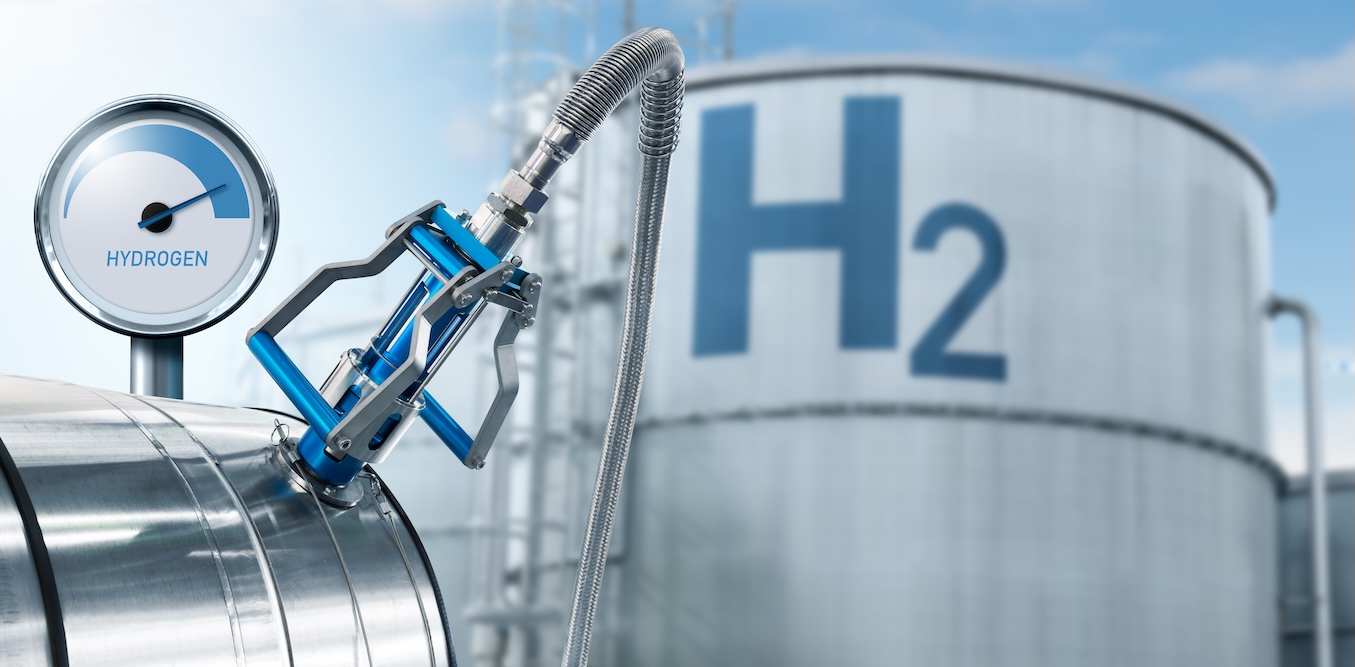
Run an electric current through water and it splits into hydrogen and oxygen — electrolysis, understood since the 1800s. The color coding describes the input: “grey” hydrogen is made from natural gas, “blue” adds carbon capture, and green is made from renewable electricity alone — clean power, repackaged into a fuel you can store and move.
Why “Long-Duration” Is the Key Word
Batteries excel at short, frequent cycling. Hydrogen plays a different game: once compressed and stored, it holds its energy for days, weeks, or even seasons with minimal storage losses — the real cost comes at conversion, which we’ll get to.
Hydrogen isn’t the only option for long-duration storage. Pumped hydro handles most of it today — pumping water uphill when power’s cheap, then releasing it through turbines later — but it only works where the geography allows, and many places don’t have that option. Iron-air batteries are a newer contender, though still unproven at scale.
What makes hydrogen different is that the fuel and the power plant are two separate things, so storage capacity depends on cavern size, not battery hardware. That makes it a partner to batteries, not competition — batteries cover the quick swings, hydrogen covers the long droughts nothing else can carry.
How It Actually Works
The basic loop is simple in concept: excess renewable electricity powers an electrolyzer, the resulting hydrogen gets compressed and stored, and later it’s burned — often blended with natural gas at first — in a turbine to generate power on demand.
Here’s where we should show our cards: NAES provides operations and maintenance services at the Advanced Clean Energy Storage hub — ACES Delta — in Delta, Utah, one of the largest green hydrogen production and storage facilities ever built. Much of what’s in this article is our teams’ day job, which shapes how we see the whole picture.
Start with the number skeptics reach for first: round-trip efficiency is roughly 30–40% in favorable configurations — lower in others — counting electrolysis, compression, and reconversion. More than half the energy is gone by the time it comes back as electricity. The honest defense isn’t to explain that away; it’s to point out that efficiency is the wrong yardstick for this job. What matters is the cost of a megawatt-hour delivered during the hours the grid is short. Hydrogen’s input power is cheap but intermittent, and that’s the trade every developer actually manages: run the electrolyzers on bargain midday surplus and utilization suffers; contract for steady renewables and the power costs more. Real projects blend both. Even so, losing sixty percent of cheap power on its way to scarcity hours can beat losing none of expensive power — and for the share that would otherwise be curtailed outright, keeping a third of something beats keeping all of nothing.
The storage piece is where geography decides winners. Salt caverns — hollowed out by pumping water into a salt formation and dissolving the space away — store energy at a small fraction of the per-kilowatt-hour cost of batteries or above-ground tanks, a gap DOE-backed storage-cost assessments put at orders of magnitude. At ACES Delta, the hydrogen lives in two caverns carved from a salt dome thousands of feet underground — together designed to store over 300 gigawatt-hours, roughly two weeks of full output for a large power plant. Storage capacity is only half the spec: withdrawal rate and turbine demand set how fast that energy can actually dispatch, and both get engineered. It’s also why hydrogen infrastructure is clustering in certain regions and skipping others entirely: you go where the salt is.
What Running It Actually Takes
Operating a hydrogen facility is its own discipline, and it’s where the industry’s real learning curve lives. Hydrogen is the smallest molecule there is — leak detection, ventilation, and safety procedures have to be rebuilt around it, not carried over from natural gas. It embrittles many common steels, which drives metallurgy and seal choices everywhere the molecule touches. It burns hotter and faster than natural gas, so NOx control has to be re-engineered too. Electrolyzers ramp with the sun, so operations follow the weather in a way conventional plants never did. Cavern storage brings integrity monitoring that looks more like midstream gas than power generation. And in the arid West, the water feeding electrolysis gets managed as carefully as the power. All of it is solvable — and all of it is why how these facilities are run will decide which projects succeed. That operational layer is the part of the energy transition nobody puts in a press release, and it’s the part we find most interesting.
Giving Old Power Plants a Second Life
Here’s a trend that doesn’t get talked about enough: some of the biggest hydrogen projects are rising on the sites of retiring coal plants. Not by swapping parts — you don’t put a hydrogen turbine in a coal boiler — but by building new hydrogen-capable units on the same ground, reusing the grid interconnection, transmission rights, and experienced local workforce that took decades to establish. It’s a way to go green without throwing away infrastructure, and much of the workforce and skills base stays.
One honest asterisk belongs here: an early blend of 30% hydrogen by volume works out to only about 10–12% of the fuel’s energy — the decarbonization math runs on the energy number, which is exactly why these plants are designed to push the blend percentage up over time rather than declare victory at first fire.
We have a front-row seat for the most prominent example: in Delta, a new purpose built plant that is hydrogen-capable from day one stands where coal units ran for decades, designed to blend fuel from the hub next door — where our teams work. The coal-to-hydrogen story isn’t a rendering to us; it’s the view from the parking lot.
Why This Is Picking Up Speed Right Now
Three things are happening at once, and together they’re pushing hydrogen from “interesting experiment” to “actually getting built.”
Demand is exploding. After decades of flat load, AI data centers are driving electricity demand up faster than utilities can build for it. Every megawatt of dispatchable capacity suddenly matters.
The ingredients are lining up. Green hydrogen still costs a multiple of grey’s roughly $1–2 per kilogram to produce — no one serious pretends otherwise, and the economics today lean on the federal 45V production credit, worth up to $3 per kilogram, with qualification deadlines that tightened in 2025. The demand side is still forming too: today’s anchor customers are power plants; tomorrow’s may be industry and fuels. But the direction is unmistakable — more surplus renewable power every year, maturing electrolyzer supply chains, and first-of-their-kind projects proving the model at scale.
The usual answer is constrained. Heavy-duty gas turbines remain the default choice for meeting surging demand for dispatchable power, but lead times now stretch years into the future. That backlog does not eliminate the need for turbines in hydrogen-fired projects, but it does raise the stakes of every new equipment decision. If developers are already committing to assets that may operate for decades, there is a stronger case for specifying hydrogen-capable equipment today — preserving the option to shift toward lower-carbon fuels as hydrogen supply, infrastructure, and economics improve.
Where This Leaves Us
Green hydrogen turns surplus renewable power into dispatchable power — energy that can wait, sometimes months, until the grid genuinely needs it. As demand keeps climbing, that kind of patience is becoming infrastructure. And infrastructure, as our crews in Delta will tell you, is only as good as the people running it.