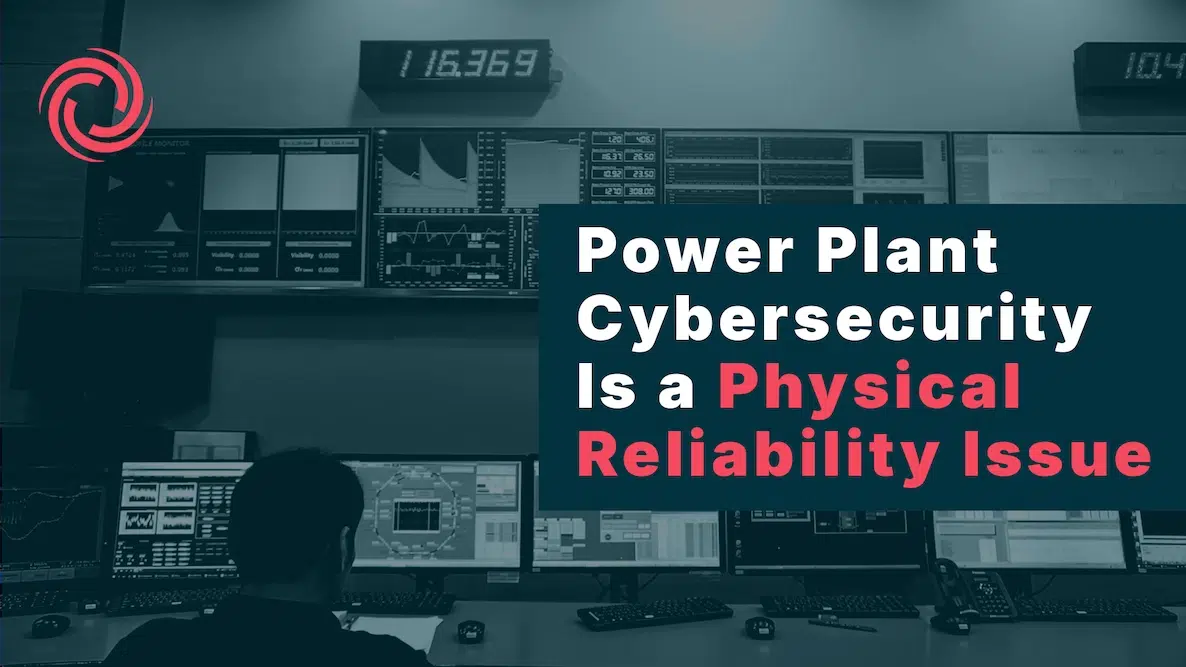
When people hear the word cybersecurity, they often picture stolen data, hacked emails, or someone in a dark room trying to break into a network. Those risks are real, but they do not fully explain what cybersecurity means inside a power plant.
For power generation facilities, cybersecurity is not just about protecting information. It is about protecting the systems that help the plant operate safely and reliably.
A cyber issue at a power plant can become an operations issue. It can affect access to control systems, vendor connections, communications, monitoring tools, and the equipment those systems support.
The Plant Is Physical, But the Risk Is Digital
Power plants are physical assets. They have turbines, pumps, compressors, breakers, control rooms, electrical equipment, and people working around complex systems every day. Reliability depends on those systems being available, understood, and properly controlled.
But modern plants do not operate only through physical equipment. They also rely on connected digital systems.
Control systems help operators monitor and manage plant equipment. Vendors may need remote access for diagnostics or support. Data will be shared with owners, operators, grid entities, or service providers. Maintenance and compliance records live in digital systems. Software tools support daily decisions that affect plant performance.
Each connection creates value, as well as a pathway for risk.
Where NERC Fits In
This is where NERC compliance becomes more than a regulatory requirement.
The North American Electric Reliability Corporation, or NERC, sets reliability standards for the bulk electric system. Its Critical Infrastructure Protection standards, often called NERC CIP, are designed to help protect the cyber systems that support reliable grid operation.
At a plant level, that starts with basic but important questions:
What systems are critical to reliable operation?
Who has access to them?
How is that access approved and reviewed?
Are the systems physically protected?
Are remote connections controlled?
Can the plant recover if something goes wrong?
These are not just paperwork questions. They are reliability questions.
A strong NERC CIP program helps a facility identify the cyber assets that matter, protect them through physical and electronic controls, train the people who interact with them, and prepare for events that could disrupt operations.
The goal is not to create a binder full of policies, but to make sure the plant is protected in practice.
Physical Security and Cybersecurity Now Overlap
In the past, plant security may have been easier to picture. A fence, a gate, a locked door, an authorized access list.
But today, someone does not need to walk through the front gate to create risk.
A vendor connection, a stolen password, a phishing email, or an unsecured remote access point can become another way into sensitive systems.
A locked room protects a server or control system cabinet. Badge access limits who can reach certain equipment. Cyber tools limit who can log in remotely. Procedures define when access is allowed, how it is documented, and how it is removed when no longer needed.
These controls may look different, but they are protecting the same thing: the plant’s ability to operate safely and reliably.
The Threat Is Not Always Complicated
Power plants have to prepare for serious cyber threats, including nation-state actors, organized cybercriminals, and advanced malware. But many risks start with easy actions.
Someone clicks a convincing email.
A password is reused.
A vendor account stays active longer than it should.
A USB drive is plugged into the wrong machine.
A procedure exists but is not followed.
A system is connected without a clear understanding of the risk.
That is why cybersecurity has to be built into daily plant discipline. Training, access control, procedure use, and awareness all matter. So does building a culture where employees understand that a small digital mistake can create a real operational problem.
Avoiding “Paper Compliance”
One of the biggest risks for any facility is confusing documentation with protection.
A plant may have policies and procedures that appear complete, but if they do not reflect how the plant actually operates, they do not reduce risk. This is sometimes called “paper compliance.” It may satisfy the language of a requirement, but not the intent behind it.
That creates a dangerous kind of confidence.
The plant looks prepared until an audit, incident, or operational change reveals gaps. By then, the cost of fixing the problem is higher, the timeline is shorter, and the risk is already there.
A better approach is to build compliance around actual plant conditions. That means understanding the equipment, the systems, the people, and the workflows. It means asking whether the control works in the field, not just whether it exists in a document.
Why Experience Across a Fleet Matters
Most plant teams are focused on running the facility. Their job is to generate power safely, reliably, and economically. Compliance and cybersecurity are essential, but they are often added to an already full workload.
That is where an experienced operating and compliance partner can provide real value.
NAES works across a large and diverse fleet, which gives its teams visibility into common gaps, audit expectations, lessons learned, and practical solutions that can be applied from one facility to another. That experience helps plants move from reactive compliance to proactive risk management.
Instead of waiting for an audit to reveal a problem, facilities can identify gaps earlier, strengthen procedures, improve access controls, and prepare teams before there is pressure.
Cybersecurity Protects the Plant
Power plant cybersecurity should not be treated as a separate IT issue. It is connected to physical equipment, plant access, operational readiness, and long-term reliability.
Because when cyber systems support physical operations, protecting those systems is part of keeping the plant running.