
by Leland McMillan, NERC Supervisor
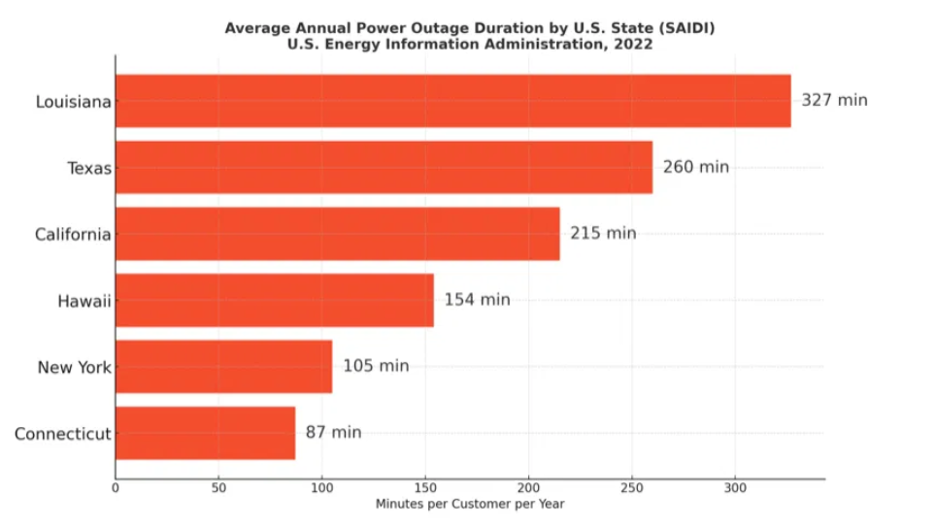
Electric reliability is obviously a huge focus for our industry, but how does the US stack up against other grids? The statistics are in and this article from “World Population Review” shows that we have some work to do. The US was ranked 8th and the breakdown by state was interesting:
Japan is a high performer, and the article offers the following remarks to corroborate:
“Japan, an island nation synonymous with precision and efficiency, also quietly leads the world in power reliability. In 2023, the average Japanese household experienced less than 5 minutes of power interruption for the entire year — the lowest globally.
Behind this performance is a dense network of decentralized generation, strict maintenance protocols, and a public-private utility system focused on resilience. Since the 2011 Fukushima disaster, Japan has diversified from nuclear into renewables and smart grid tech — without sacrificing uptime.
Fascinating fact: Tokyo’s grid stability is so high that many hospitals and labs don’t even maintain backup generators — a global rarity.”
Germany appears to be the leader in Europe and is providing steady power while switching to a Nuclear portfolio:
“Germany’s “Energiewende” (energy shift) is one of the boldest energy transformations anywhere. Even as it phases out nuclear and ramps up renewables, Germany maintains grid outages to just 12 minutes per household per year — among the best in Europe.
What makes it work? A robust transmission network, decentralized renewables, and strong citizen participation. Even small towns generate surplus energy via wind and solar, feeding it back into the national grid.
🔋 Surprising stat: On some windy days, Germany generates so much clean power it exports excess electricity at negative prices.”
Singapore has fantastic reliability and state-of-the-art self-healing methods, but it is highly reliant on others as most of its power is imported:
“In land-scarce Singapore, a reliable grid isn’t just a goal — it’s engineered into national identity. Customers average under 1 minute of outages per year, thanks to tight grid digitization, predictive maintenance, and central planning.
Singapore imports over 95% of its energy — yet it’s piloting floating solar, exploring regional power links, and investing in hydrogen. Its digital “Grid 2.0” is turning electricity into a responsive, self-healing system.
🧠 Futuristic fact: Singapore’s grid can detect and isolate faults in real time, rerouting power before the lights even flicker.”