By Richard Schlottmann, NERC Project Manager
Introduction
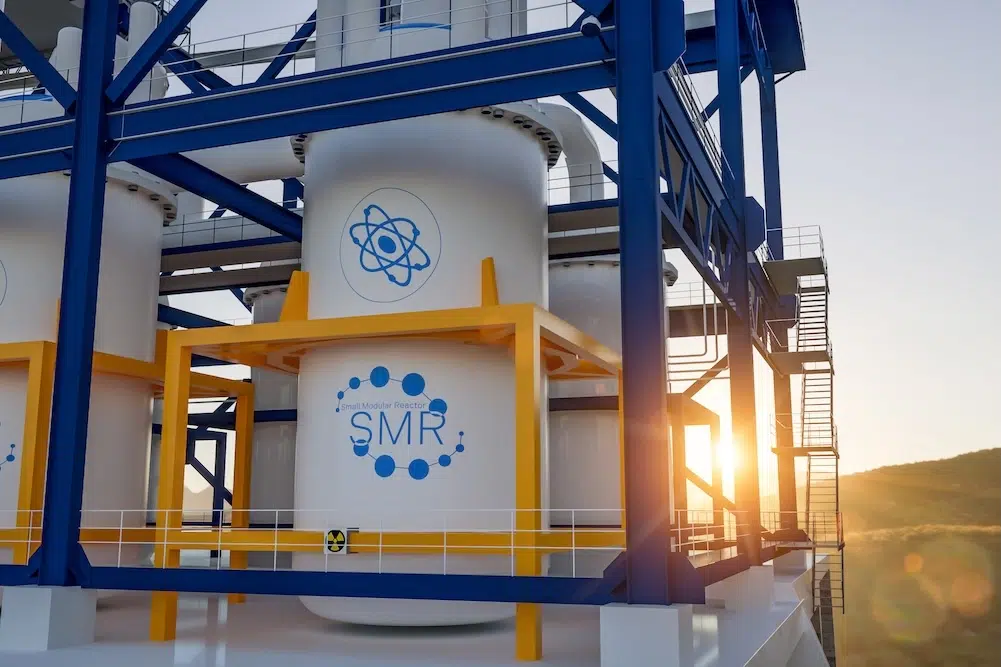
Small Modular Reactors (SMRs) are emerging as a pivotal technology in the evolution of the electrical grid, offering a blend of flexibility, reliability, and resilience that addresses many of the challenges facing modern power systems. As the energy sector accelerates its transition toward decarbonization and distributed generation, SMRs are positioned to play a critical role in shaping the grid of the future.
Modular Flexibility: A New Paradigm for Grid Expansion
Unlike traditional nuclear power plants, which require multi-gigawatt investments and long construction timelines, SMRs are designed to be deployed in increments of 50–300 megawatt electric (MWe) per unit. This modular approach enables utilities to scale generation capacity in line with demand growth, retirements of aging assets, or the integration of new industrial loads. SMRs can be installed individually or as part of multi-unit arrays, allowing for staged deployment and capital efficiency. The ability to site SMRs closer to load centers or in remote regions further enhances grid flexibility, reducing the need for extensive transmission infrastructure and improving the economics of power delivery.
Enhancing Grid Reliability and Stability
SMRs provide the same robust, baseload generation as conventional nuclear plants, but with added operational agility. Their steady, 24/7 output supports grid reliability, ensuring a stable supply of electricity regardless of weather or market fluctuations. In addition, many SMR designs can provide ancillary services such as frequency regulation and voltage support—functions that are increasingly vital as variable renewables like wind and solar become more prevalent. Some advanced SMR designs offer black start capability, enabling them to help restore grid operations following a major outage.
Seamless Integration with Renewable Energy
One of the most compelling advantages of SMRs is their compatibility with renewable energy sources. Unlike traditional large reactors, many SMRs are engineered for load-following operation, meaning they can ramp output up or down to balance fluctuations in wind and solar generation. This flexibility allows SMRs to serve as a backbone for hybrid energy systems, combining nuclear, renewables, and energy storage to deliver reliable, low-carbon power. SMRs are also well-suited for microgrid applications, providing a stable anchor for distributed energy resources in remote communities, military installations, or critical infrastructure sites.
Siting Opportunities and Repowering Potential
The compact footprint and enhanced safety features of SMRs open up new possibilities for siting. Retired coal plant sites, for example, can be repurposed for SMR deployment, leveraging existing grid interconnections and infrastructure. This approach not only accelerates project timelines but also supports economic revitalization in communities affected by the energy transition. SMRs can also be deployed in remote or off-grid locations, bringing reliable electricity to regions where traditional large-scale generation is impractical.